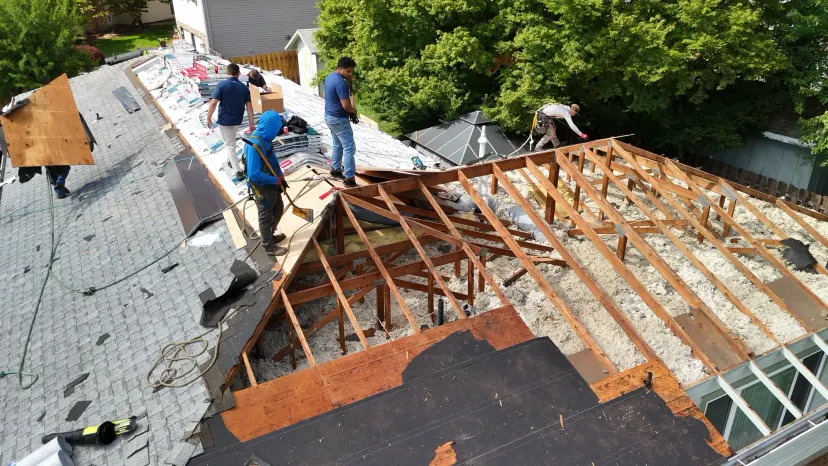
If you've started collecting bids for a new roof, you've probably noticed the numbers are all over the place. One contractor says $16,000, another says $28,000, and neither explains why. I'm an estimator, and I price roofs across the Portland metro every week, from Sellwood Craftsman bungalows to Beaverton split-levels to the ranch homes out in Gladstone. This guide lays out what roof replacement actually costs here in 2026: our own estimate bands, the ranges other Portland-area sources publish, and what pushes a job toward the high or low end.
One thing up front: every figure below is a planning range, not a quote. Your roof has its own pitch, access, layer count, and history, and those move the number. For a real figure, our instant roof estimate tool gives you a ballpark in about a minute, and a free in-home consultation gives you an itemized proposal you can compare line by line.
Typical roof replacement cost ranges in Portland (2026)
Roofing is priced by the square: 100 square feet of roof surface. The ranges below come straight from the rate table inside our instant estimator, the same numbers we build proposals from. They assume a one-story home with a medium-pitch roof, and they include tearing off one existing layer, disposing of it, and rebuilding the full waterproofing system: underlayment, ice-and-water shield at the eaves and valleys, drip edge, flashing, and ventilation.
| Roof size (roof surface) | GAF architectural shingles | Cedar shake |
|---|---|---|
| 10 squares (1,000 sq ft) | $8,000-$13,800 | $9,200-$13,800 |
| 15 squares (1,500 sq ft) | $12,100-$20,700 | $13,800-$20,700 |
| 20 squares (2,000 sq ft) | $16,100-$27,600 | $18,400-$27,600 |
| 25 squares (2,500 sq ft) | $20,100-$34,500 | $23,000-$34,500 |
Two honest notes about that table. First, these are internal estimate ranges, not a final bid: the number that counts is the itemized proposal after a free on-site consultation. Second, the wizard adjusts for pitch and height. A medium pitch multiplies the base band by 1.15, a steep pitch by 1.3, and a second or third story adds 8 or 16 percent for staging and ladder work. On a 20-square roof, the same shingles can land at $14,000 to $24,000 on a walkable one-story ranch or $21,100 to $36,200 on a steep three-story, before any decking repair.
Most of what we install is GAF architectural shingles, and for good reason: they carry strong wind ratings, they're warranted by North America's largest roofing manufacturer, and they're the best cost-to-lifespan value in our climate. Cedar is beautiful and historically correct on some older Portland homes, but under our moss and forty inches of annual rain it demands real maintenance, and we confirm final cedar pricing in the proposal rather than the wizard. Run your own roof size through the instant estimator to see where your home lands in those bands, or read about everything that goes into a Cornerstone roof replacement, from tear-off to final magnetic sweep.
What other Portland-area sources publish
You should not have to take one company's word for any of this, ours included. Below are the ranges other sources publish for the Portland area, quoted from their live pages on October 13, 2026, with links so you can check each one yourself.
| Source | Published range | What their range covers |
|---|---|---|
| HomeBlue (national estimator network) | $4,500-$28,600 for a Portland roof replacement | Their Portland, OR guide; asphalt quoted at $5-$7 per sq ft installed, and a basic 1,500 sq ft roof averaging $8,800 ($6,800-$10,700) |
| Roof Life of Oregon (Portland contractor) | $5,400-$11,700 typical for a full replacement | Their published Portland figures; their asphalt example prices at $6.80 per sq ft and their cedar shake example at $12.80 |
| River City Roofing (Portland contractor) | $5,000-$15,000 for asphalt shingles | Their published Oregon-wide range; they quote metal roofs higher, at $7,500-$30,000 or more |
| Jobin Roofing (Clark County, serving the Portland metro) | $12,000-$30,000+, most homes $14,000-$20,000 | Their 2026 Portland-Vancouver guide; architectural shingles with full tear-off, quoted at $7-$9 per sq ft installed |
| IBEX Roof (Portland contractor) | $8,400-$16,500 for asphalt shingles | Their published Portland range; they quote metal roofing at $20,400-$42,000+ |
Sources: HomeBlue, Roof Life of Oregon, River City Roofing, Jobin Roofing, IBEX Roof (links open in a new tab)
Read those ranges with care, because they are not apples to apples. Some include tear-off and disposal, others don't say. Some quote the whole project, others a per-foot rate. One is a statewide figure rather than Portland-metro. The honest takeaway is the shape of the market: every published Portland-area band overlaps our own table, and a bid that lands far below all of them is usually missing scope, not margin.
How per-square pricing actually works
The single biggest source of confusion in roofing bids is the square. Homeowners measure their house, say 1,800 square feet of living space, and then wonder why the estimate says 24 squares. Two reasons. First, roof area includes overhangs, garages, and porches. Second, and bigger, is pitch: a sloped surface covers more area than the flat footprint beneath it. A moderately pitched roof has roughly 15 to 25 percent more surface than its footprint; a steep one can have 40 percent more.
So the math runs like this. Take the roof's measured surface area, divide by 100 to get squares, then multiply by the per-square installed rate. On a 24-square roof at our shingle band of $700 to $1,200 per square, you are looking at $16,800 to $28,800 before pitch and story adjustments. When we estimate, we measure from the air with aerial measurement tools and then verify on site, so the square count in your proposal is the roof you actually have, not a guess from the driveway.
What moves a Portland price up or down
Six levers do almost all of the moving. The pitch and story factors are the exact adjustments our wizard applies; the rest are the line items we price on site once we can see the roof.
| Cost driver | Typical effect on price | Notes |
|---|---|---|
| Roof pitch | Low 1.0x, medium 1.15x, steep 1.3x the base band | Steep crews move slower and rig safety lines, so labor climbs with pitch |
| Stories | Second story adds 8%, third adds 16% | Staging, ladder work, and debris handling multiply with height |
| Tear-off layers | One layer included in every band; a second layer adds removal labor and disposal | Two existing layers means a mandatory full tear-off down to the sheathing |
| Decking repair | Priced per sheet once the roof is open | Nobody can see the deck before tear-off; one Portland-area contractor publishes $85-$125 per sheet, and we confirm the count and price in your proposal |
| Permit triggers | A like-for-like reroof generally needs no Portland building permit, even when sheathing gets replaced | Structural repair, a heavier material class, townhomes, wildfire zones, or solar panels trigger one; our Portland roofing permit guide walks the full list |
| Complexity and disposal | Valleys, dormers, skylights, and chimneys add custom flashing work; a 20-square tear-off generates several tons of debris | Six dormers cost more per square than a clean gable at the same material, and metro dump fees keep climbing |
Sources: Jobin Roofing (per-sheet decking figure) (links open in a new tab)
Tear-off vs. overlay: why we almost always tear off
An overlay, nailing new shingles over the old ones, saves the tear-off labor and disposal cost, which is why the cheapest bid you get will often be an overlay. Here is what that savings buys you in western Oregon: no chance to inspect the decking, new shingles telegraphing every curl and bump of the old layer, extra weight the framing was never designed to carry, and a shorter-lived roof because the bottom layer keeps the whole sandwich warmer and damper. In a climate that stays wet from October to June, trapping a layer of old, moisture-holding material under your new roof is a bad trade.
There's also the warranty angle. Manufacturers structure their strongest warranties around complete systems installed on a clean deck. Every range in this guide assumes a full tear-off of one existing layer, because that is how we build every roof and what our roof replacement service includes as standard. If your home already has two layers, tear-off is no longer optional: it has to come down to the sheathing, and the extra removal labor adds to the disposal line item.
What pushes a Portland roof toward the high end
Decking and rafter repair, the cost you can't see from the ground
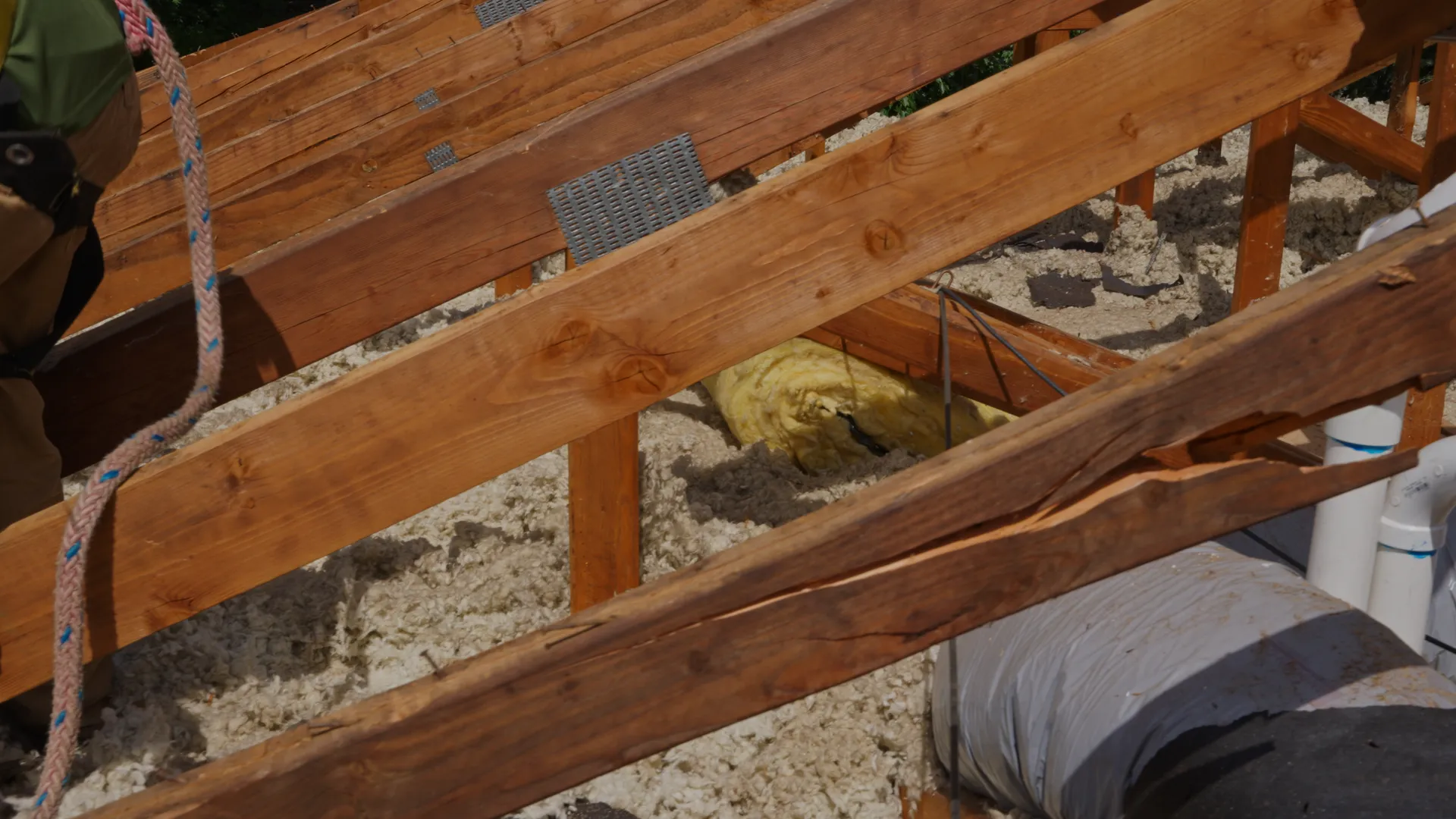
Nobody can see your decking until the old roof comes off, which is why honest estimates carry a per-sheet or per-linear-foot price for replacement rather than pretending it won't happen. On a recent project in Gladstone, we tore off a tired roof and found cracked rafters hidden under decades of blown-in insulation, the kind of damage that only shows itself mid-tearoff. We sistered new lumber alongside the damaged rafters, re-decked the affected sections, and only then built the new roof system. That repair added cost, but the alternative was nailing a new roof onto a structure that couldn't hold it.
This is common across the metro's older housing stock. Pre-war homes in Irvington and Sellwood often have skip sheathing under original cedar shakes that needs a full plywood overlay. Mid-century ranches sometimes show sagging between rafters where decades of leaks softened the deck. Budget a contingency: on homes built before 1980, decking repair of some kind shows up on a meaningful share of our tear-offs.
Pitch, stories, and complexity
A walkable, low-pitch ranch roof is the baseline. Move to a steep Craftsman gable or a three-story Foursquare and labor climbs, which is exactly what the wizard's 1.15 and 1.3 pitch factors and 8 to 16 percent story adjustments price in. Valleys, dormers, skylights, and chimneys each add detail work: every penetration is custom flashing, and in our climate flashing is where roofs live or die. A roof with six dormers simply costs more per square than a clean gable, even at the same material.
Wind exposure and PNW weather factors
Freeze-thaw gets talked about a lot in roofing, but in the Willamette Valley it's rare; what actually tests a roof here is wind-driven rain and moss. East-metro homes take the brunt of Columbia Gorge outflow, and on our Gresham-area roofing projects we spec shingles and nailing patterns for sustained winter winds that drive rain sideways under laps and ridge caps. Everywhere in the metro, north-facing slopes grow moss, and moss lifts shingle edges and holds moisture against the surface. Zinc or copper strips at the ridge, algae-resistant shingles, and honest conversations about tree trimming are all part of speccing a roof for this climate rather than a generic one.
Timing matters too. We roof year-round, but a November replacement needs dry-window planning, temporary dry-in every night, and sometimes hand-sealing shingle tabs that won't get enough sun to self-seal until spring. That care is built into how we schedule. It is not a surcharge, but it is a reason to be skeptical of a crew promising a one-day tear-off in a week of steady rain.
Permits, disposal, and the line items people forget
A roof replacement in Portland comes with a few costs that don't show up in the per-square rate but belong in any complete proposal. The good news on permits: a straightforward reroof on a one- or two-family Portland home generally does not require a building permit, even when some or all of the sheathing gets replaced. A permit does kick in when the structure changes, the new material is significantly heavier, or the home is a townhouse, sits in a wildfire zone, or is getting solar roof panels. Our Portland roofing permit guide walks the full trigger list. Disposal is real money as well: a 20-square tear-off generates several tons of shingle waste, and dump fees in the metro have climbed steadily. Finally, if your gutters are at the end of their life, replacing them while the roof edge is open and the ladders are up is far cheaper than a separate trip later.
- Permit fees, when the scope triggers one: structural repair, heavier material, townhouse, wildfire zone, or solar
- Tear-off and disposal of the old roof: several tons of debris on an average home
- Decking and rafter repair, priced per sheet or per linear foot once the roof is open
- Flashing, pipe boots, and ventilation upgrades: small line items, huge leak protection
- Gutters and downspouts: cheapest to replace while the roof edge is already open
Choosing materials with confidence
Cost is only half the decision; you also have to live with how the roof looks from your street for the next three decades. Shingle color reads very differently under gray Portland skies than it does on a sample board in a showroom, and the roof is a third or more of what people see when they look at your house. Before you commit, preview real shingle colors and profiles on a photo of your actual home with RoofVision, our roof visualization tool. It's the same step we walk through in consultations, and it takes the guesswork out of the one decision you can't undo cheaply. Still deciding who to hire? Our comparison of Portland roofing contractors puts licenses, Google ratings, and warranties side by side.
Questions worth asking, and one red flag
Before you sign anything, ask a few pointed questions. Ask what the manufacturer warranty covers, and whether it's backed by certified installation. Are permit and disposal fees included in the estimate, or added later? Will the crew replace damaged decking as part of the quoted price, or bill separately if they find rot? A contractor who answers clearly, without hedging, has usually done the work enough times to know what a job requires. And one red flag outweighs everything else on the list: anyone who quotes a full roof price over the phone without seeing your roof is guessing.
What good prep looks like: on a recent roof replacement in Hillsboro, our crew had the printed underlayment down and the GAF shingle bundles staged and ready before the first course went on. It's a small detail, but that kind of job-site discipline is what keeps a project on schedule and the finished roof looking clean from the street, not just watertight from above. It's the difference between a rushed tear-off and a roof built to last.
One more thing worth raising while the roof is open: the chimney. Flashing and chimney masonry age together, and if your chimney cap or brickwork hasn't been inspected in a while, the cheapest time to have it looked at is when the roof is already open. Chimney work isn't our trade, so for that piece of the project we point homeowners to First Rate Chimney, since flashing and chimney work go hand in hand.
How to get a number you can trust
Start with the instant estimate to frame the conversation, then get two or three in-home proposals from licensed Oregon contractors, and check the CCB number every time (ours is #261422). Compare scope, not just price: tear-off included or not, decking repair priced how, what underlayment, what warranty, who's responsible for the permit. The cheapest number on the table is usually the one missing the most line items. If you'd like our proposal in that stack, call (971) 525-6764 or book a free consultation. We'll measure, walk the roof, and hand you an itemized number that means what it says.
Common questions
How much does a new roof cost in Portland, OR?
Our current Portland estimate bands run $700 to $1,200 per square installed for GAF architectural shingles, tear-off of one layer included. On a typical 20-square, one-story, medium-pitch roof that works out to $16,100 to $27,600. The tables above show our bands by roof size next to the ranges other Portland-area sources publish.
How much is a roof replacement per square foot in Portland?
Installed pricing in Portland generally runs $5 to $12 per square foot of roof surface, depending on material and who you ask. Our estimate wizard bands architectural shingles at $7 to $12 per square foot ($700 to $1,200 per square). HomeBlue publishes $5 to $7 for asphalt, and Jobin Roofing publishes $7 to $9, each with their own scope assumptions. Pitch, stories, and decking repair move any of these figures.
What is the most expensive part of a roof replacement?
Materials and the labor to install them make up most of any bid, but the expensive surprises come from what nobody could see before tear-off: rotted decking priced per sheet, and rafter repairs on older homes. Steep pitch, a second or third story, and detail work around dormers and chimneys are the other big movers.
Is it cheaper to shingle over my existing roof?
An overlay skips tear-off labor and disposal, so the upfront number is lower. In the Portland climate we rarely recommend it: you can't inspect the decking, the old layer traps moisture under the new roof, and manufacturer warranties are strongest on a clean deck. If your home already has two layers, a full tear-off is required.
Does homeowners insurance cover a roof replacement?
Insurance typically covers sudden damage, a windstorm blow-off or a fallen limb, not age and wear. If a storm is involved, document everything and call us before you call the carrier. We'll inspect, photograph, and help you understand whether a claim makes sense.