Permits are the least glamorous part of a roof replacement, and the part homeowners ask about least — until something goes wrong. I'm an estimator, and part of my job is knowing exactly when a Portland roofing project crosses the line from 'no permit needed' to 'BDS wants drawings.' Here's the plain-English version of how roofing permits work in Portland, what triggers them, who should pull them, and what to expect on timeline and inspections. If you're planning a roof replacement, this is worth five minutes before you sign anything.
Do I need a permit to reroof my Portland home?
The City of Portland's Bureau of Development Services — BDS — administers building permits, and for roofing the dividing line is structural work. A like-for-like reroof on a typical single-family home, where new shingles go onto the existing roof structure, generally does not require a building permit. Oregon's residential code treats that as maintenance of the existing structure. The work still has to meet code — underlayment, flashing, ventilation, maximum layer counts — but there's no permit fee and no inspection visit.
Cross into the structure, though, and the calculus changes. These situations typically do require a permit in Portland:
- Replacing or repairing rafters, trusses, or other structural framing
- Reroofing a townhouse or a home in a wildfire zone, or installing building-integrated solar roof panels
- Changing the roof structure: adding dormers, raising a pitch, cutting in a skylight that requires framing changes
- Converting roof materials where the new system is significantly heavier — tile over a structure built for shingles, for example
- Any roofing work tied to a larger remodel that already has a permit open
| Scenario | Permit needed? | Who pulls it |
|---|---|---|
| Tear-off and reroof, existing structure unchanged | Generally no | Nobody — code compliance still applies |
| Reroof plus minor decking patch (a few sheets) | Generally no | Nobody — documented in your proposal |
| Rafter or truss repair discovered mid-tearoff | Yes — building permit | Your contractor, under their CCB number |
| Adding a dormer, skylight with framing changes, or new roofline | Yes — building permit, plan review likely | Your contractor or design professional |
| Owner performing their own structural roof work | Yes — owner-builder permit | The homeowner, with full liability |
Reroof vs. structural work: a real example
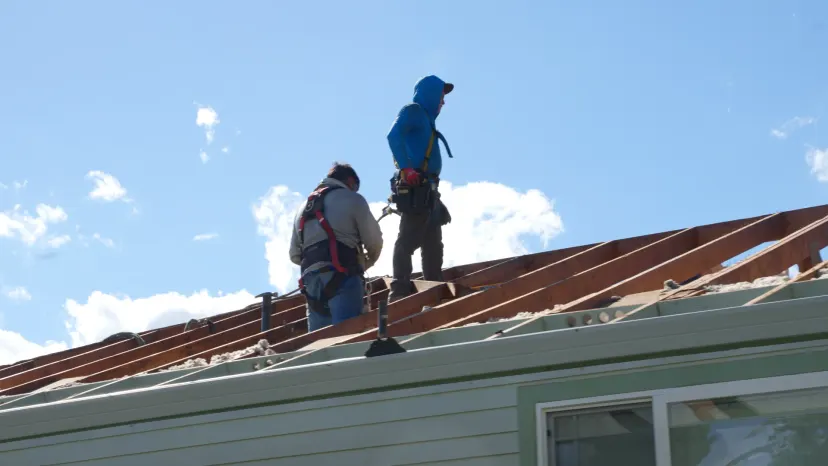
This line isn't academic for us — we cross it in the field. On a recent Gladstone project, a routine tear-off exposed cracked rafters hidden under blown-in insulation. At that moment the job changed categories: what started as a reroof now included structural repair, and we handled it accordingly — the damaged framing was sistered with new lumber, the affected sections re-decked, and the structural work permitted and inspected before the new roof system went on. That's what the process looks like when it's done right: the scope changed, the paperwork changed with it, and the homeowner has an inspection record proving the bones of their roof are sound.
The uncomfortable version of that story is the contractor who finds the same cracked rafters, patches over them, and shingles the roof anyway because pulling a permit mid-job slows things down. The homeowner never knows — until a buyer's inspector or an insurance adjuster does. This is one reason our project process builds a documented scope-change step into every job: when we find something, you see photos, you approve the repair, and the permit follows the work.
Who should pull the roofing permit?
In Oregon, either the property owner or a licensed contractor can pull a residential building permit. When a contractor is doing the work, the contractor should pull it, full stop. Here's why. The name on the permit is the party the city holds responsible for code compliance. When a licensed contractor pulls the permit under their CCB number, the responsibility — and the liability — sits with the people swinging the hammers. Oregon's Construction Contractors Board exists precisely for this: licensing, bonding, and insurance requirements give homeowners somewhere to turn when work goes wrong. You can verify any contractor's license in minutes on the CCB website; ours is #261422, and we expect you to check.
The arrangement to be wary of is the contractor who asks you to pull an owner-builder permit for work they're performing. Sometimes it's framed as saving money — the owner-builder permit is the same fee, so there's no savings. What it actually does is make you the legal builder of record: you're now responsible for code compliance, for the subcontractors, and potentially for workers' injury liability. Legitimate contractors don't ask. If one does, that tells you something about how the rest of the job will go.
How long does a roofing permit take in Portland?
For the roofing permits Portland projects actually need, the process is usually quick. Straightforward residential permits are often issued over the counter or through BDS's online portal within days. Work that needs plan review — dormers, roofline changes, engineered repairs — takes longer, typically one to three weeks depending on scope and how busy the bureau is. Inspections follow the work: a framing or structural inspection before new decking covers repaired rafters, and a final when the job's complete. Inspectors in Portland are generally practical people; if the work is done to code and visible, inspections are short.
The scheduling point that matters for you: permits should be sequenced before tear-off, not scrambled after. When we build a project schedule, permit issuance is a milestone the crew start date depends on — nobody wants a roof open to the Oregon sky while paperwork clears. Our rainy season makes that sequencing non-negotiable from about October through May.
A quick note on the Washington side
We work both sides of the river, and the rules differ enough to mention. Vancouver and Clark County run their own permitting, and Washington's system is separate from Oregon's — different permit portals, different fee schedules, and a different state licensing regime (Washington registers contractors through L&I rather than licensing them through a CCB equivalent). Up in Olympia, Thurston County and the city each have their own processes again. The principles carry over, though: structural work gets permitted, the contractor doing the work should hold the registration and pull the permit, and you should verify both. If you're on the Washington side, our Vancouver service area page covers how we handle cross-river projects.
The bottom line for Portland homeowners
Most reroofs in Portland don't need a permit; the moment structure is involved, they do. Either way, the rules that protect you are the same: a licensed, bonded, insured contractor whose CCB number you've verified, a written scope that says who's responsible for permits, and a paper trail you can hand to the next owner of your house. If you're planning a roof replacement in Portland and want a straight answer on what your specific scope requires, call (971) 525-6764 or book a free consultation. If you want to picture the finished roof while the paperwork sorts out, preview GAF shingle colors on your home with RoofVision. We deal with BDS every week, and we'll tell you in the proposal — before anyone touches a shingle — exactly what your project needs.
Common questions
Do I need a permit to reroof my house in Portland?
For a straightforward reroof — tearing off old shingles and installing new ones of similar weight — Portland generally does not require a full building permit for one- and two-family homes, though the work still has to meet code. The exemption even covers replacing some or all of the existing roof sheathing. A permit does kick in when the new material is heavier, the structure changes (rafters, trusses, a new roofline), the home is a townhouse or in a wildfire zone, or solar roof panels are going on.
Who pulls the permit, me or the contractor?
On our projects, we do. A licensed contractor pulling the permit under their CCB number puts responsibility for code compliance where it belongs — on the people doing the work. Be cautious with any contractor who asks you to pull an owner-builder permit for work they're performing; it shifts liability onto you and is a classic red flag.
What happens if roof work is done without a required permit?
Unpermitted structural work can surface years later as a nightmare: failed home inspections during a sale, insurance claims denied after a loss, or a city stop-work order mid-project. Retroactive permits mean opening finished work for inspection. It's never worth it — permits on structural roofing work are a few hundred dollars of insurance on a five-figure project.
How long does a roofing permit take in Portland?
Simple residential roofing permits are typically issued over the counter or online within days, sometimes same week. Structural repairs that need plan review take longer — plan on one to three weeks depending on scope and BDS workload. We build permit timelines into the project schedule so the crew isn't waiting on paperwork with your roof torn open.
Will the city inspect my new roof?
When a permit is involved, yes — a BDS inspector verifies the work, typically at the structural stage and at final. It's an extra set of trained eyes on your project at no cost to you beyond the permit fee, and the inspection record becomes part of your home's documentation, which buyers and insurers both appreciate.