A roof problem rarely picks a convenient moment. It shows up during the first big atmospheric river of the season, right as you're hosting family for the holidays, or the morning after a windstorm knocks a branch loose over the garage. If you're staring at a brown ring spreading across your ceiling in Hillsboro, Gladstone, or anywhere else in the Portland metro area, you need a plan, not a search engine rabbit hole at 11pm.
This article walks through what actually counts as a roofing emergency, what to do in the first hour, and how a call to a licensed contractor should go from there.
What Counts as an Emergency vs. What Can Wait
Not every roof issue needs a crew on your property tonight. A missing shingle on a dry week is worth scheduling, not panicking over. But a few situations genuinely can't wait:
- Active water coming through the ceiling or running down an interior wall
- A tree limb, branch, or debris that has punctured or lifted the roofing material
- Storm or wind damage that's exposed the underlayment or decking to open weather
- A chimney flashing failure during heavy rain
- Ice damming that's forcing water back under the shingles
If you're not sure which category you're in, a quick phone call usually sorts it out faster than guessing. That's true whether you're in close-in Portland, out toward Hillsboro, or across the river in SW Washington.
The First Hour: What to Do Before Help Arrives
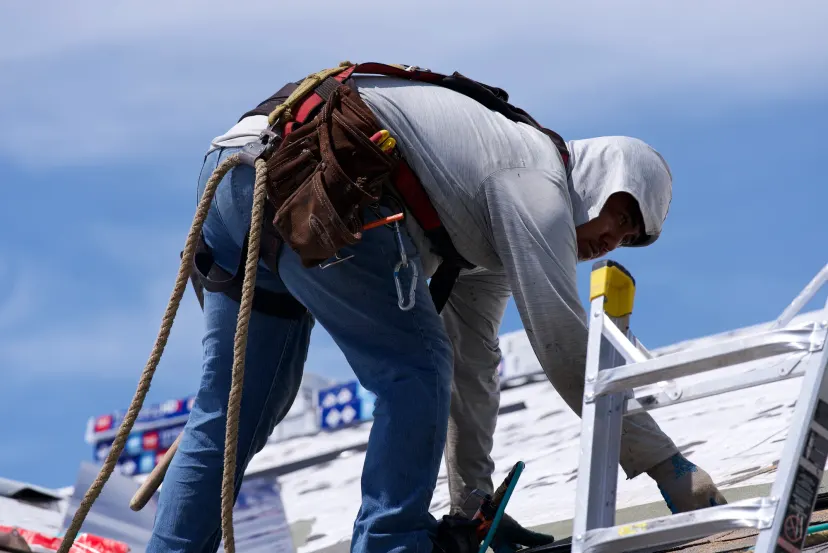
When water is actively coming in, the goal is damage control, not a fix. Move furniture and electronics out of the drip zone, and set a bucket or tarp down to catch water so it doesn't spread to flooring or drywall below. If you can safely access the attic, a flashlight scan for the source of the leak gives the contractor a head start, but don't climb onto a wet roof yourself. That's exactly the kind of fall risk a harnessed, trained crew is equipped to handle and a homeowner in work boots is not.
Photograph the damage, inside and out if it's safe to do so, both for your own records and for any insurance claim. Then make the call. A reputable roofer should be able to tell you over the phone whether this is a same-day situation or something that can be tarped and scheduled for the next business day.
How Cornerstone Handles Emergency Calls
Cornerstone Renovations is based in Hillsboro and works across the Portland Metro and SW Washington area, which means crews are already distributed across the region rather than sitting in one spot. When a call comes in about active leaking or storm damage, the priority is getting the roof weathertight, usually with a temporary tarp or emergency patch, so the interior of the home stops taking on water while a permanent repair is scoped.
Because Cornerstone is a GAF-certified roofing contractor, repairs to an existing GAF system can usually be matched correctly rather than patched with whatever shingle happens to be on the truck, which matters more than people expect when it comes to preserving a manufacturer warranty down the road. For situations where the roof needs more than a patch, whether that's age, prior storm damage, or a full section that's failed, Cornerstone can walk through the roofing services page and explain what a proper repair versus a replacement looks like for that specific roof.
One winter, a call came in about a Hillsboro home where water had started tracking down through a bathroom ceiling during a hard rain. The crew found a section of underlayment that had failed near a roof penetration, got it tarped the same afternoon, and came back once the weather broke to install new GAF shingles and proper flashing around the vent. It's a small story, but it's the normal shape of an emergency call: stop the water first, fix it right second.
Why Waiting Costs More Than Calling
A small leak left alone doesn't stay small. Water finds the path of least resistance, which often means it's already traveled along a rafter or down inside a wall cavity before it ever shows up as a stain on the ceiling. By the time you see discoloration, there can be weeks or months of slow saturation behind the drywall, which invites rot, mold, and in some cases structural repair that costs far more than the roof fix itself would have.
This is especially true in the Pacific Northwest, where the rainy season doesn't let up for long stretches at a time. A roof that's compromised in October and ignored through the winter is taking on moisture nearly every week until spring. Getting ahead of it, even with a temporary tarp while a full repair is scheduled, is almost always cheaper than the alternative.
If the roof is older or has taken damage in more than one spot, it's worth asking whether repair or replacement makes more financial sense. The roof replacement cost guide breaks down what that decision typically looks like for homes in the Portland area, and it's a useful read before a crew is even on site.
What Happens After the Emergency Fix
A tarp or patch stops the bleeding, but it's not meant to be permanent. Once the weather allows, the next step is a full inspection of the roof, not just the spot that failed, since storm damage and wind events often loosen shingles in more than one location even if only one of them leaked. From there, a homeowner gets a clear picture of whether this is a contained repair or the first sign that the roof is near the end of its service life.
For homeowners who want to see what a repaired or replaced roof would actually look like on their own house before committing to anything, RoofVision lets you upload a photo of your home and preview GAF Timberline HDZ and Grand Sequoia shingle colors on your own roofline. It's a small thing, but it takes some of the guesswork out of a decision that's usually made under stress.
If there's exterior damage beyond the roof itself, such as gutters torn loose or fascia boards damaged by the same storm, it's worth asking your contractor whether that falls under the same visit or needs a separate trade. Cornerstone also works alongside other local specialists when a project calls for it; for homes that need broader digital documentation or drone-based damage assessment as part of an insurance claim, Cornerstone has worked with Agentic PNW on that side of things, which can speed up the claims process considerably.
Getting a Quote Before the Next Storm
If your roof has been nagging at you, a soft spot here, a shingle that looks off there, it's worth getting ahead of it before the next storm turns a minor issue into a middle-of-the-night call. You can request a quote directly, and a Cornerstone estimator can tell you honestly whether you're looking at a repair, a partial replacement, or a full roof. Cornerstone is licensed, bonded, and insured under Oregon CCB #261422, which is worth confirming for any contractor you let onto your roof, emergency or not.
Common questions
How fast can a roofer actually respond to an emergency leak in Portland?
Response times vary by contractor and by how widespread the storm damage is across the region, since a single windstorm can generate many calls at once. Calling as soon as you notice the leak, rather than waiting to see if it gets worse, gives you the best shot at a same-day tarp.
Will a temporary tarp actually stop the leak?
A properly installed tarp, secured over the damaged area and sealed at the edges, will stop active water intrusion in most cases. It's meant as a short-term fix until weather allows for a permanent repair, not a long-term solution.
Does homeowners insurance usually cover emergency roof repair?
Many policies cover sudden storm or wind damage, but coverage depends on your specific policy and the cause of the damage, so it's worth calling your insurer early in the process. Photos and documentation from the time of the damage make that claim process much smoother.
Can Cornerstone match an existing roof after a partial repair?
As a GAF-certified contractor, Cornerstone can typically match shingle lines like GAF Timberline HDZ when repairing part of an existing roof. For older or discontinued shingle styles, ask directly during your estimate what the closest match will look like.