Most roofs do not fail all at once. They decline slowly, and the decline shows up in specific, readable ways — if you know where to look. After years of inspecting roofs across the Portland metro, these are the five signs that tell us a roof is done, along with the honest version of when each one is still a repair instead.
1. Bald shingles and granules in the gutters
Asphalt shingles are protected by a coat of mineral granules. When those granules wash off — you will see them collecting in gutters and at downspout outlets, and dark bald patches on the shingles themselves — the asphalt underneath is exposed to sun and water, and it deteriorates fast. A few square feet of scuffing where a branch rubbed is nothing. Granule loss across whole slopes means the shingles are at the end of their service life. Repair verdict: spot damage, repair it. Widespread balding, replacement — there is nothing left to patch to.
2. Curling, cupping, or cracked shingles
Shingles that curl at the edges, cup in the middle, or crack across the tab are telling you the asphalt has dried out and gone brittle. In our climate this usually shows up first on south and west slopes, then everywhere. Curled shingles also catch wind — and in east-metro spots like Gresham, where Gorge outflow wind tests every roof, brittle lifted edges become blow-offs in the first real storm. Repair verdict: a handful of damaged shingles can be swapped. Curling across multiple slopes means the whole field is failing; repairs will chase it for a year or two at most.
3. A sagging roofline or cracked structure underneath
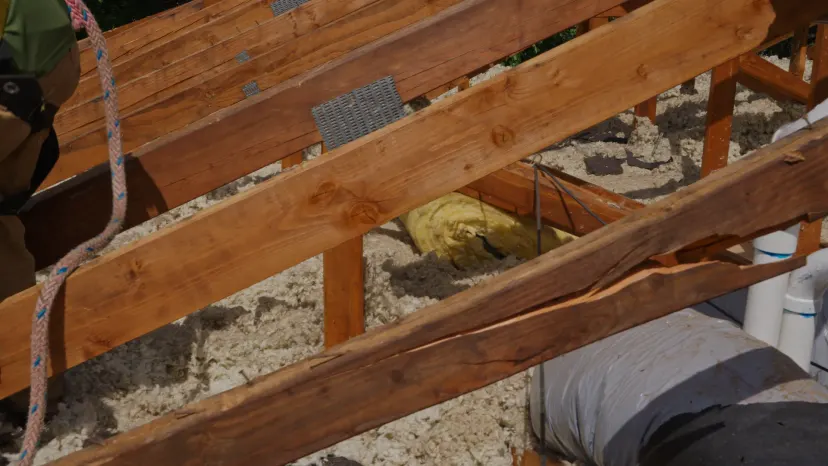
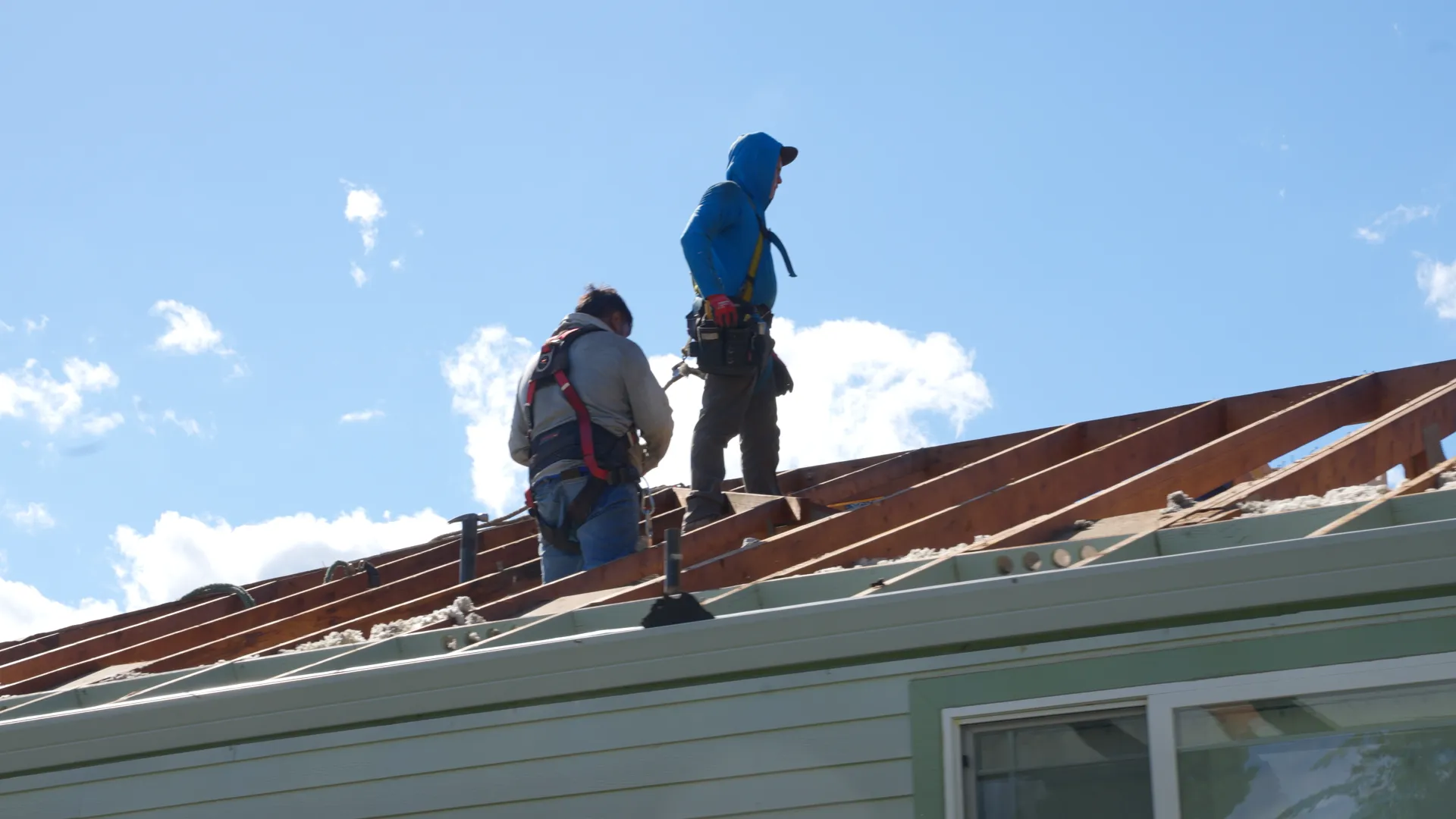
This is the one that is never a shingle repair. If the roofline sags between rafters, or the deck feels soft underfoot, moisture has been getting past the shingles for a long time and the structure is paying for it. On a recent roof replacement in Gladstone, we tore off an old roof and found rafters that had cracked — the photos in this article are from that job. The homeowners had no idea; the shingles were hiding it. We sistered new lumber alongside the cracked rafters, rebuilt the deck, and then roofed over structure that was actually sound. Repair verdict: if the structure is compromised, the roof comes off. The only question is how much deck and framing needs rebuilding once it is open.
4. Moss that keeps coming back after cleaning
Every north-facing roofline in Portland grows moss; that alone is not a death sentence. The warning sign is moss that returns thick within a season or two of a proper cleaning. Heavy, established moss means the shingle surface has lost enough granules to hold moisture and give roots something to grip — the roof has become a good habitat, which is another way of saying it has aged out. Moss also lifts shingle edges as it grows, letting water run sideways underneath. Repair verdict: young moss on a sound roof, treat and clean it. Chronic moss on a weathered roof, put the cleaning money toward replacement.
5. Repeated leaks and ceiling stains
One leak with an obvious cause — a cracked pipe boot, a piece of step flashing that pulled away — is a repair, full stop. What we watch for is the pattern: a stain here one winter, a different stain two rooms over the next, a drip that only shows up in wind-driven rain. Water travels along decking and rafters before it shows on drywall, so scattered stains usually mean the underlayment and flashing layers are failing as a system, not at a point. Repair verdict: first leak, find the cause and fix it. Third leak in three winters from different spots, the system is done.
| Sign | Repair makes sense when… | Replace when… |
|---|---|---|
| Granule loss / bald shingles | Damage is limited to one small area | Bald patches span whole slopes; gutters full of granules |
| Curling or cracked shingles | A few shingles, rest of field is flat and sealed | Curling across multiple slopes; shingles brittle to the touch |
| Sagging deck / cracked rafters | Never — structure always comes first | Any sag, soft decking, or cracked framing found on inspection |
| Moss growth | First light growth on an otherwise healthy roof | Thick moss returns within a season or two of cleaning |
| Leaks / ceiling stains | One leak with a single identifiable cause | Repeated leaks from different locations over multiple winters |
One more factor: plain old age
Sometimes the sign is the calendar. If your architectural shingle roof is past twenty years and showing any of the five signs above — even mildly — replacement planning beats emergency planning. A roof replaced on your schedule in a dry month costs less and goes smoother than one replaced in a hurry after a December leak soaks the bedroom ceiling. If you do not know the roof's age, we can usually date it within a few years from the shingle style and wear pattern during an inspection.
How to check your own roof from the ground
You do not need a ladder to do a useful first pass. Walk the perimeter on a dry day with binoculars and look for uneven color (bald patches), edges lifting or curling, shingles that are obviously missing, and a roofline that dips anywhere along the ridge or between rafters. Check where downspouts empty for accumulations of granules — it looks like coarse black sand. Then go inside: on a bright day, turn the attic lights off and look for daylight through the deck, and check the insulation and rafters for dark staining or a musty smell. Anything on that list is worth a professional look. What we ask is that you skip the ladder part — a roof you suspect is failing is exactly the wrong roof to learn on.
The honest bottom line
Here is the rule of thumb we use on inspections: if the shingles themselves still have life in them, almost any leak or damage is worth repairing. If the shingles are worn out, every repair is borrowed time. A free inspection settles which situation you are in — we will get on the roof, look in the attic, show you photos of what we find, and tell you straight which side of the line you are on. If it is replacement time, you will get a system installed to the standard our GAF partnership requires, not a shingle-nail-and-run. If you want a ballpark first, our instant estimate tool will give you a planning range for your roof size and pitch in about a minute. To see the shingles on your own roof first, preview GAF colors on your home with RoofVision.
Common questions
How long does an asphalt shingle roof last in Portland?
A quality architectural shingle installed to spec typically lasts 25 to 30 years here. Cheap three-tab shingles, poor attic ventilation, and heavy moss pressure can cut that to 15 to 20. Portland's constant moisture is harder on roofs than sun-belt climates, so the low end of any manufacturer's range is the honest expectation.
Can I just repair a few damaged shingles?
Often, yes. If the damage is isolated — a few shingles lifted by wind, one failed pipe boot, a small flashing gap — a repair is the right call and any honest contractor will tell you so. Repairs stop making sense when the damage is widespread or the shingles themselves are at the end of their life, because you are paying to patch a roof that will keep failing somewhere new.
Does moss mean I need a new roof?
Not by itself. Surface moss on an otherwise healthy roof can be treated and cleaned. Moss becomes a replacement-level problem when it has been there for years, lifted shingle edges, ground away granules, and worked moisture into the mat underneath. At that point cleaning reveals the damage rather than fixing it.
How much does a roof replacement cost in Portland?
For GAF architectural shingles, most Portland-metro homes land in the $7 to $12 per square foot installed range, including tear-off, with pitch and stories moving the number up or down. A free inspection and itemized proposal is the only way to get a real number for your specific roof.