A roof replacement is one of the biggest projects most homeowners ever hire out, and the unknowns are the stressful part: How long will my house be a job site? What if they find rot? What happens when it rains — and this is Portland, so it will rain? Here is exactly how a replacement runs when we do it, day by day, from the signed proposal to the final walkthrough. It follows the same sequence laid out on our process page, with the on-roof detail filled in.
Before day one: proposal, materials, and prep
Once you approve the proposal, we order materials and schedule around a reasonable weather window. If you are still choosing a shingle color at that stage, you can preview GAF shingle colors on your own roof with RoofVision before the order goes in, and our comparison of Portland roofing contractors is there if you are still weighing bids. A day or two before the crew arrives, the supplier delivers shingle bundles and underlayment — usually loaded right onto the roof — and a dump trailer or drop box lands in your driveway for tear-off debris. Your part of the prep is simple:
- Move vehicles out of the driveway and away from the eaves. Falling shingle bundles and stray nails do not respect paint jobs.
- Take anything fragile off walls and shelves. Tear-off vibrates the whole house, and pictures do fall.
- Cover or relocate anything stored in the attic. Debris and dust come through deck gaps, especially on older skip-sheathed homes.
- Plan for pets. The noise is constant during tear-off, and doors and gates are opening all day.
- Point out anything below the drip line you care about — plantings, patio furniture, a grill — so we can tarp or move it.
Day one: tear-off and the deck inspection
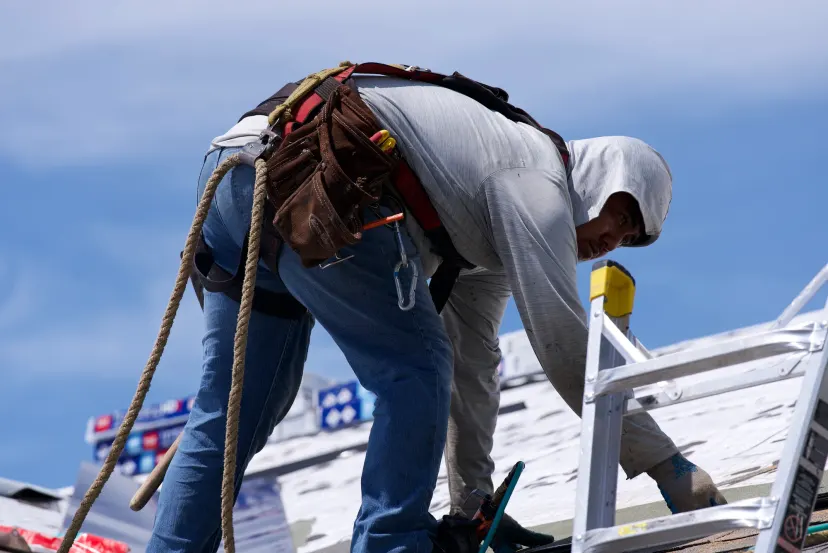
The crew starts by protecting the perimeter — tarps over landscaping, plywood against windows and siding near the eaves — then strips the old roof down to the wood, one section at a time. Everything goes straight into the trailer. This is the loud, messy day, and on most homes the tear-off itself is done by early afternoon.
Then comes the part that separates a real replacement from a re-shingle: the deck inspection. With the roof open, we walk every sheet of sheathing looking for soft spots, delamination, and dark staining that marks old leaks. Most decks are fine or need a sheet or two swapped. Occasionally we find more. On a job in Gladstone last season, the tear-off exposed cracked rafters the old shingles had been hiding for years — we documented it, walked the homeowners through it, sistered new lumber alongside the cracked members, and rebuilt the deck over sound structure. If something like that turns up on your house, you will see photos and a price before we touch it. Surprises get surfaced, never buried under new shingles.
Day one into two: drying in
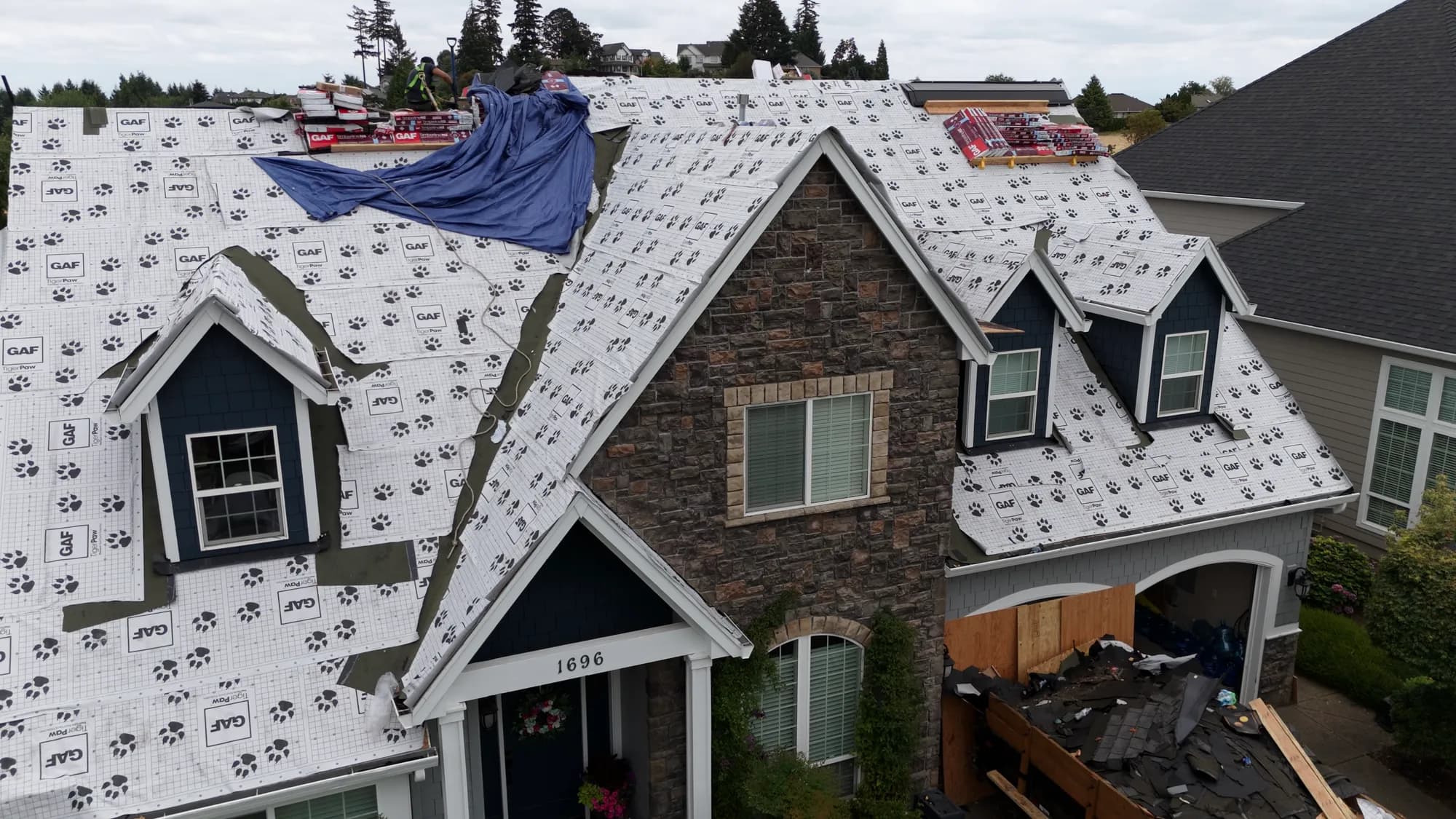
Before any shingle goes on, the roof gets dried in: ice-and-water shield at the eaves, valleys, and around every penetration — the places Portland rain actually attacks — then synthetic underlayment across the field, with drip edge at the perimeter. Once a section is dried in, it is waterproof, which is why we only tear off what we can dry in the same day. If the forecast turns on us mid-job, your house is sealed, not tarped and hoping.
Days two and three: installation
Shingling is the fast, satisfying part: starter course at the eaves, field shingles nailed to the manufacturer's pattern, then flashing, pipe boots, ridge vent, and ridge caps. We install GAF architectural shingles to spec because that is what the warranty requires and what our climate demands — the same system on every roof replacement we do. Ventilation gets balanced at this stage too; an attic that breathes properly is a roof that lasts longer and a house less prone to the condensation problems we see in tight Northwest homes.
Final day: cleanup, sweep, and walkthrough
Cleanup is not an afterthought — it is a line item. Tarps come up, gutters get cleared of roofing debris, and the whole property gets a magnetic sweep for nails: driveway, lawn, planting beds, the street in front. Then we walk the job with you, hand over the warranty paperwork, and answer whatever is on your mind. On a typical Beaverton ranch or two-story, the whole arc — first shingle torn off to last magnet pass — runs two to four working days.
Living in the house while it happens
Most families stay home through the whole job, and it is fine — with expectations set. Tear-off day sounds like a drumline on your ceiling and vibrates the walls; nailing days are rhythmic but constant. Driveway access is gone for the duration, gates open and close all day, and there is a crew on your roof from morning to mid-afternoon. If you work from home and take calls, day one is a good day for the office or a coffee shop. Past that, the job is surprisingly self-contained: we bring everything, haul everything away, and leave the site broom-clean each evening, not just at the end.
The whole arc at a glance
| Stage | What happens | Typical timing |
|---|---|---|
| Before day one | Proposal approved, materials delivered, dump trailer placed, home prepped | 1–2 days ahead |
| Day one | Site protection, tear-off, deck inspection, any sheathing or rafter repairs, dry-in | Full day |
| Days two to three | Shingle installation, flashing, pipe boots, ridge vent and caps | 1–2 days |
| Final day | Gutter clearing, magnetic nail sweep, walkthrough, warranty paperwork | Half day |
The honest word about weather
Any contractor who promises an exact finish date between October and May is guessing. We schedule tear-offs around forecasts, dry in every section the day it opens, and call weather holds when real rain is coming. A hold costs a day or two; trapping moisture under a new roof costs years. If your job pauses for weather, that is the system working, not the schedule slipping — and we will tell you the morning it happens, not leave you wondering why no one showed up. When you are ready to talk through your own roof, call us at (971) 525-6764 or start with a free inspection — you will get a straight timeline for your specific house, not a generic one.
Common questions
How long does a roof replacement take?
Most Portland-metro homes take two to four working days from tear-off to final cleanup. A simple single-story ranch with a sound deck can be done in a day or two; steep pitches, multiple dormers, or deck and rafter repairs add time. Weather is the wild card — we will not leave a roof open to rain, so a wet forecast can pause the schedule.
Do I need to be home during the replacement?
No. Once the project is approved, we can run the job while you are at work, and we will keep you updated with photos. You are always welcome on-site. We do ask that pets stay inside or off-site during tear-off days — it is loud, and debris comes off the roof.
What happens if you find rotten decking?
We stop, document it with photos, and show you before we fix it. Soft or delaminated sheets of decking get cut out and replaced with new sheathing at a per-sheet price that is listed in your proposal, so there are no surprises. Structural finds like cracked rafters get the same treatment: documented, priced, approved by you, then repaired.
Will you replace my roof in the rain?
We tear off and dry in section by section, so the house is never exposed — and we schedule tear-off around the forecast. Light drizzle does not stop underlayment work, but we will not open a roof ahead of real rain. In the wet season, that sometimes means short weather holds; we would rather lose a day than trap moisture in your roof.