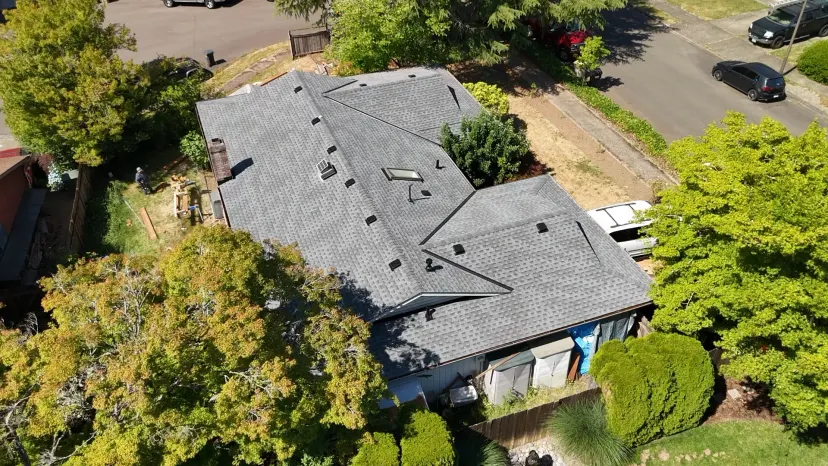
Short answer: kill the moss first with a roof-rated treatment, let it die and dry out, then brush it off gently with a soft brush, working down-slope. Never pressure wash asphalt shingles: the wand strips the granules that protect them and can void the manufacturer warranty. And if thick moss returns within a season or two of a proper cleaning, the roof is telling you the cleaning money is better spent on replacement. That is the same guidance we give homeowners on inspections. If you own a home in Portland, you have moss on your roof, have had it, or will. Forty inches of annual rain, months of grey skies, and shade from Douglas fir and big-leaf maple make the metro one of the best moss habitats in the country, and every north-facing roofline is a proving ground. The sections below walk through the why, the how, and the timing.
Why Portland roofs grow moss
Moss does not need soil — it needs moisture that sticks around and a rough surface to anchor to. A new shingle sheds water and dries fast, which is why young roofs stay clean. As shingles age, they lose granules, the surface roughens, and they hold a film of water longer after each rain. Add shade that keeps the roof from ever fully drying — a constant under the canopy in neighborhoods across Lake Oswego and the west hills — and moss moves in. That is also why it concentrates on north slopes: they get the least sun and stay wet the longest.
This matters because moss is partly a symptom. Light moss on a ten-year-old roof is just Portland being Portland. Heavy, established moss on an eighteen-year-old roof is telling you the shingle surface has aged into a good growing medium, and no cleaning changes that.
What moss actually does to shingles
Left alone, moss damages a roof two ways. It holds water against the shingle surface, keeping the asphalt saturated through months of wet weather, which accelerates granule loss and surface breakdown. And as clumps thicken, they lift shingle edges and tabs, creating channels where wind-driven rain runs sideways under the shingle course instead of down over it. Freeze-thaw in a cold snap makes the lifting worse. None of this happens in a season — but three or four wet winters of unchecked growth will take real years off a roof.
Safe removal: what works and what ruins roofs
- Never pressure wash asphalt shingles. The wand strips granules off with the moss, voids many manufacturer warranties, and can cut years off the roof's remaining life. If a contractor reaches for a pressure washer on shingles, send them home.
- Do kill the moss first with a roof-rated treatment (zinc sulfate or a dedicated moss killer), let it die and dry out — usually a few weeks — then remove it gently with a soft brush, working down-slope so you do not lift the shingle laps.
- Do treat during our dry stretch. Late July through September is the window: treatments need dry weather to work, dead moss releases more easily, and the roof is safest to walk.
- Do clean the gutters at the same time. Dead moss, needles, and granule runoff all end up there, and a clogged gutter in October backs water up under the eave edge — exactly the kind of moisture problem our seamless gutter and cover systems are built to prevent.
- Don't use laundry bleach mixes at high strength. They can streak siding, kill landscaping below the drip line, and corrode gutters and flashing.
Prevention: keeping it from coming back
Once a roof is clean, the goal is keeping it that way. Zinc or copper strips installed near the ridge leach trace metal into the rainwater running down the slope, which suppresses regrowth for ten to fifteen feet below the strip — effective and cheap on a sound roof. Trimming branches back to open up sun and airflow over north slopes does more than any chemical. And a light maintenance treatment every year or two, applied before moss reestablishes, is far easier than removing a mature crop. If your roof is due for replacement anyway, modern algae-resistant shingles — which we install on every roof replacement — have copper granules built in and resist growth from day one.
Timing treatments to the Oregon calendar
Moss work is seasonal here whether we like it or not. Treatments need a dry roof and a dry forecast to work, which rules out most of October through June. The practical rhythm: treat in late summer, brush off the dead growth a few weeks later, clean gutters in early fall before the rains return, and apply a light preventive treatment each following dry season. Homeowners who stay on that cycle rarely face a major removal job. Homeowners who let it go for five years often find out the moss was holding the roof's remaining life together, and the conversation shifts from cleaning to planning a replacement on their own schedule instead of a leak's schedule.
A note on cedar shakes
Everything above applies to asphalt shingles, which is what most of the metro wears. Cedar shakes are a different animal: they need airflow to survive our winters, moss clogs the gaps between shakes and holds them wet, and aggressive cleaning splinters the wood — so cedar wants gentle, regular maintenance from someone who knows the material. If you are not sure what your roof is made of or what it can tolerate, that is a five-minute answer on a free inspection.
When moss means the roof is done
There is a point where cleaning is the wrong spend. These are the tells we look for: moss that returns thick within a season or two of a proper cleaning; shingles underneath that are bald, curled, or crumble at the edges when the moss comes off; moss rooted into the laps between shingles; or soft spots in the deck around heavily colonized areas. Any of those means the roof surface itself has failed and moss is just the visible part. We would rather tell you that on a free inspection than sell you a cleaning that buys you one winter. If the roof still has life, we will tell you that too — and exactly how to keep it. If it is replacement time instead, you can preview GAF shingle colors on your home with RoofVision before you decide.
Common questions
Is it OK to pressure wash moss off a roof?
No — not on asphalt shingles. A pressure washer strips the protective mineral granules off the shingle surface along with the moss, and those granules are what shield the asphalt from sun and water. Pressure washing an aging shingle roof can take years off its life and may void the manufacturer warranty. On shingles, moss comes off with a soft brush and treatment, not a wand.
Why does my roof have moss but my neighbor's doesn't?
Shade and orientation. Moss needs moisture that lingers, so it concentrates on north-facing slopes, on sections shaded by trees, and anywhere the roof dries slowly after rain. A full-sun south slope in an open lot can stay clean for decades while the shaded north side of the same roof turns green.
Do zinc or copper strips actually work?
Yes, within limits. Rain washes trace amounts of zinc or copper off a strip installed near the ridge, and that runoff inhibits moss growth on the slope below it — typically for ten to fifteen feet down-roof. Strips are a good preventive on a clean roof. They will not remove established moss, and they will not rescue a roof that is already worn out.
When does moss mean I need a new roof?
When the moss is a symptom rather than the problem. If thick moss returns within a season or two of a proper cleaning, or if cleaning reveals bald, curled, or crumbling shingles underneath, the roof surface has aged past the point where maintenance helps. At that stage, money spent on repeated cleanings is better put toward replacement.