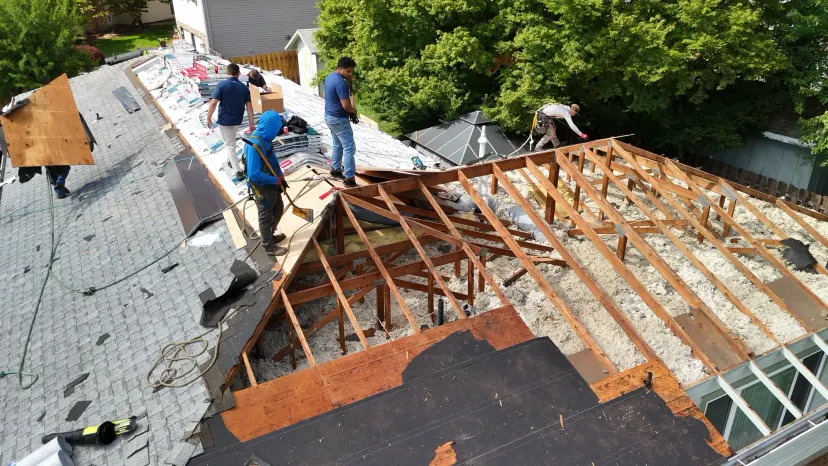
Here's the short answer we give every homeowner who calls us after a storm: if a specific event damaged your roof — wind tore shingles off, a tree came down on it, hail bruised the mat — your Oregon homeowner's policy will almost certainly pay to repair or replace it. If the roof simply wore out after twenty-plus years of Pacific Northwest rain, it won't. Most real claims land somewhere between those two extremes, and where yours lands depends on your policy type, your documentation, and how clearly the damage ties back to a dated event. This guide walks through all three, from the contractor's side of the table.
What Oregon policies cover, and what they exclude
Standard homeowner's insurance in Oregon is built around sudden and accidental damage from a named peril. Wind, falling objects like trees and limbs, hail, fire, and the weight of ice and snow are the perils that matter for roofs. When one of those events damages your roof, the policy responds. What every policy excludes is wear and tear, gradual deterioration, and neglect. In a climate that drops forty-plus inches of rain a year on Portland-area homes, that exclusion does a lot of work: moss, a slow leak around an aging pipe boot, rotted decking under a long-dead valley, and shingles that simply reached the end of their design life are all maintenance items, not insurance events.
The gray area is an older roof hit by a real storm. Carriers will cover storm damage on an old roof, but they may depreciate the payout, argue the damage was pre-existing, or scope a patch where a replacement is warranted. That fight is won or lost on documentation, which is why the rest of this article exists. One more exclusion that surprises people: damage caused by faulty workmanship or an unlicensed contractor is on you, so verify an active Oregon CCB license before anyone touches your roof.
| Scenario | Usually covered? |
|---|---|
| Wind lifts, creases, or strips shingles during a storm | Yes — a named peril, even on an older roof |
| A tree or large limb falls on the roof | Yes — falling object, including debris removal |
| Hail bruises or cracks the shingle mat | Yes — if the hits are documented per slope |
| Rain enters through an opening the storm created | Yes — resulting water damage is typically covered |
| Moss, algae, or slow deterioration over the years | No — considered maintenance |
| A leak from a worn pipe boot or end-of-life flashing | No — wear and tear |
| Rot traced to chronically clogged gutters | No — neglect |
| Granule loss or curling from age alone | No — the roof simply wore out |
| Damage from unlicensed or DIY work | No — faulty workmanship exclusion |
ACV vs. RCV: the two kinds of roof coverage
Pull out your declarations page and look for one of two acronyms, because the difference is worth thousands of dollars. Actual cash value (ACV) pays what your roof was worth the day before the loss: replacement cost minus depreciation for age and condition. With a new architectural shingle roof running $700 to $1,200 per square installed in the Portland area, a twenty-year-old roof on an ACV policy might only be valued at a fraction of replacement cost. You cover the rest.
Replacement cost value (RCV) pays what it actually costs to replace the roof with like materials, minus your deductible. It usually arrives in two checks: the actual cash value up front, then the withheld depreciation once the work is complete and invoiced. That second check is called recoverable depreciation, and homeowners leave it on the table surprisingly often by never submitting the final invoice. A trend worth knowing: several carriers writing policies in Oregon now shift older roofs to ACV-only coverage or a roof payment schedule at renewal, sometimes with little fanfare. Read your renewal paperwork each year so a storm isn't how you find out.
Documentation that wins claims
Adjusters decide claims on evidence, not sympathy. The file that gets approved quickly looks like this:
- Dated 'before' photos of your roof. Even phone shots from the yard after the last cleaning establish the roof's condition prior to the storm.
- Photos taken right after the event: every slope from the ground, any debris, downed limbs, and shingles or shingle fragments you find in the yard. Bag them, don't toss them.
- A dated, written roof assessment from a licensed Oregon contractor, with photos and the CCB number on it. This is the anchor document of the whole claim.
- The storm date. Note when the wind event actually happened; weather records for the Portland metro are easy for an adjuster to verify, and the date of loss drives everything downstream.
- Maintenance records: gutter cleanings, moss treatments, past repairs. They directly rebut the neglect argument carriers reach for first.
What the adjuster is actually looking for
The adjuster's job is to answer three questions: what peril caused this, when did it happen, and what's the honest scope of repair. For hail they may chalk a test square on each slope and count impacts. For wind they're looking for creased tabs, broken seal strips, and lifted shingles in a pattern that matches the storm's direction, not random wear scattered across the roof. They also check collateral indicators: dented gutters, downspouts, and roof vents often tell the story of a storm more clearly than shingles alone.
Two practical points. First, have your contractor present for the adjuster's inspection. We walk roofs with adjusters regularly, and creased shingles and compromised seal strips are easy to miss from a ladder. Second, if the approved scope comes back light, it can be supplemented — a contractor's photos, measurements, and a line-item estimate give the carrier something concrete to respond to.
The claim timeline, step by step
- Day one: make it safe and stop active water. Tarping and other temporary mitigation are normally reimbursable, but hold off on permanent repairs until the adjuster has seen the damage.
- First days: file the claim, get your claim number, and write down the date of loss. Most policies require prompt notice.
- Within a week or two: the adjuster inspects. Have your contractor's written assessment in hand before this meeting, and your contractor on the roof if possible.
- Decision: you receive the scope of loss and a first check — actual cash value minus your deductible.
- Completion: the work is finished, the final invoice goes to the carrier, and on an RCV policy the recoverable depreciation is released.
If the claim is denied or the scope is far off, you can appeal, request a re-inspection, or hire a public adjuster. As a last resort, the Oregon Division of Financial Regulation takes consumer complaints about carriers. Most well-documented claims never get anywhere near that stage.
Why a contractor's written assessment matters
Of everything in your file, the written assessment from a licensed local contractor does the most work. It establishes the roof's condition with photos and dates, ties the damage to a specific event, and gives the adjuster a professional scope to react to instead of a blank page. It also protects you from the opposite mistake: filing a claim for damage that's really wear and tear, which ends in a denial sitting on your claims history.
We document storm damage across the metro every winter, including east-county neighborhoods like Gresham that take the brunt of the Columbia Gorge wind. If you suspect storm damage, call (971) 525-6764 before you file — we'll inspect the roof, put the assessment in writing, and tell you plainly whether you have a claim worth making. If the claim does end in a replacement, you can preview GAF shingle colors on your own roof with RoofVision before you pick one. Our FAQ covers how we work directly with adjusters once a claim is open.
Common questions
Will filing a roof claim raise my insurance premium?
It can, though storm claims are generally viewed more leniently than liability or water damage claims, and carriers weigh your history and their own rate filings. No honest contractor can promise your rate won't move. Ask your agent how your carrier treats weather claims before you file — that's exactly what your agent is for.
My roof is twenty years old. Will insurance still cover storm damage?
Yes, age doesn't disqualify you. A wind or tree claim on an old roof is still a valid claim. What changes is the payout: on an actual cash value policy the settlement will be heavily depreciated, and the carrier may push for repair over replacement. On a replacement cost value policy you're made whole either way, minus the deductible.
Should I get my roof inspected before I file a claim?
Yes, ideally by a licensed contractor rather than letting the adjuster be the first eyes on it. A written assessment tells you whether the damage is likely to exceed your deductible, whether it's storm damage at all, and gives you documentation from day one. Filing blind for what turns out to be wear and tear just puts a denial on your claims record.
Does insurance cover moss removal or moss damage?
No. Moss is a maintenance issue under every standard policy, and in the Pacific Northwest it's the most common source of roof problems we see. Regular treatment and keeping the roof clear of fir needles is the homeowner's job — and the maintenance records that prove you did it strengthen any future storm claim.
What if my claim gets denied?
Ask for the denial in writing with the specific policy language, then request a re-inspection with your contractor present and new documentation attached. If that fails, a public adjuster will work the claim on your behalf for a percentage, and the Oregon Division of Financial Regulation accepts consumer complaints about carriers. Many denials are really under-scoped inspections that a well-documented supplement can fix.